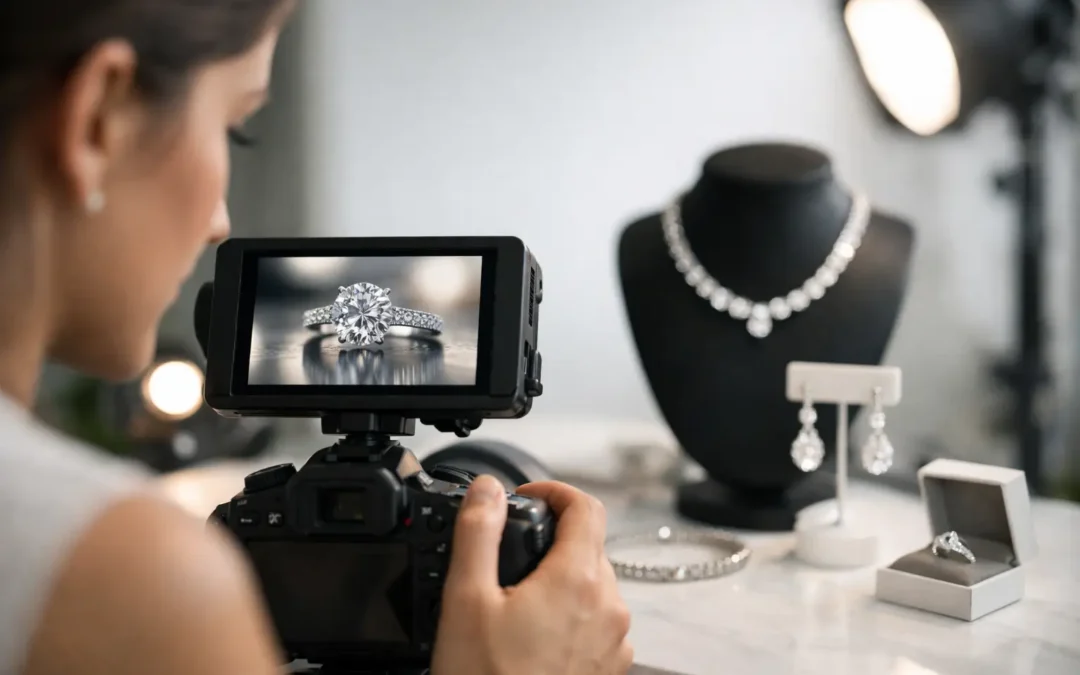
A diamond can look bright in a still image and still feel flat to a shopper who cannot tell how it catches light, sits on the hand, or moves with the wearer. Jewelry videography solves that problem. A short, polished product video gives customers the visual proof they need before they click Add to Cart, request a quote, or visit your showroom.
For jewelry brands, motion is not just a nice extra for social media. It is a practical sales tool. Video can reveal a gemstone’s fire, the finish of a gold setting, the articulation of a bracelet, and the true scale of a piece in ways a single angle cannot. When your products are small, reflective, and often high-value, that extra confidence matters.
What Jewelry Videography Shows That Photos Cannot
Still photography remains the foundation of a strong jewelry catalog. It gives shoppers clean detail, consistent color, and the zoomable product views they expect on an e-commerce page. Video adds the dimension that stills cannot: movement under controlled light.
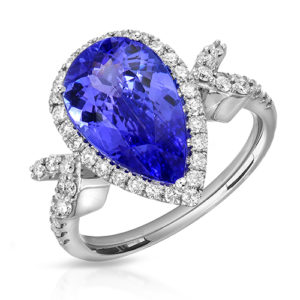
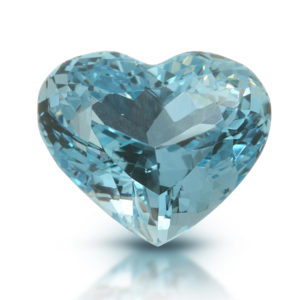
A rotating ring can show how a prong setting rises above the band. A slow close-up of an emerald can reveal its natural character without making the stone appear dull. A necklace video can show how the chain drapes, where the pendant rests, and how the piece reflects light from different angles. These are not minor details. They answer the quiet questions customers ask before committing to a purchase.
The goal is not to make every piece spin endlessly. Good jewelry video is intentional. It directs attention toward the feature that makes the item worth choosing, whether that is diamond brilliance, an unusual setting, a hand-engraved detail, or the satisfying movement of linked gold.
Start With the Job the Video Needs to Do
The best format depends on where the video will appear and what a customer needs to understand. A clean product rotation works beautifully for an e-commerce listing because it keeps the item central and supports a straightforward buying decision. A jewelry-on-model clip is stronger when scale, personality, or styling is the main story.
For a new collection launch, a more creative campaign video may be the right choice. This approach uses movement, props, texture, and carefully selected lighting to build a mood around the jewelry. It can give a cohesive collection a recognizable visual identity across social media ads, website banners, email campaigns, and trade show displays.
A practical production plan often includes several video types:
- Short product rotations for product pages and online marketplaces
- Macro detail clips that highlight gemstones, settings, and craftsmanship
- Hand-model or jewelry-on-model video to show scale and wearability
- Vertical social clips for launches, paid ads, and behind-the-scenes content
Not every product needs every format. A volume catalog may benefit most from consistent 360-degree-style rotations, while a signature engagement ring or limited-edition collection may deserve a more detailed creative treatment. The right mix comes down to your sales channel, product price point, and brand position.
Light Is the Difference Between Sparkle and Glare
Jewelry videography is technically demanding because the product reflects nearly everything around it. A polished metal surface can easily pick up harsh highlights, dark camera reflections, or unwanted color casts. Gemstones add another layer of complexity: they need enough directional light to sparkle, but not so much that their facets blow out into white patches.
That is why jewelry video should be created with purpose-built lighting rather than a quick phone recording at a workbench. A professional setup controls reflections while preserving the bright edges, contrast, and flashes of light that make jewelry feel alive. The camera movement, lens choice, background, and light source all have to work together.
Color accuracy also deserves close attention. Yellow gold should look warm without turning orange. Rose gold should retain its soft pink tone. White gold, platinum, and silver need clean, neutral presentation. For gemstones, the visual goal is accurate appeal, not artificial oversaturation. A stone that looks dramatically different when it arrives can lead to disappointment, returns, and lost trust.
Movement Should Feel Premium, Not Busy
Fast edits, dramatic camera swings, and excessive effects can work for fashion content, but they often distract from fine jewelry. The product should remain easy to inspect. Slow turns, controlled push-ins, and crisp macro shots typically create a more luxurious result because they give shoppers time to notice the details.
This is especially true for high-ticket items. A customer considering a diamond ring, a rare gemstone, or a custom piece is not looking for visual noise. They want reassurance. They want to see the setting from the side, the consistency of the metalwork, and the way light behaves across the stone.
There are exceptions. A bold, trend-driven jewelry brand may use faster vertical video to catch attention on social platforms. Even then, the opening seconds should clearly show the jewelry. If viewers have to guess what is being sold, the content may earn views without creating meaningful interest in the product.
Show Scale Before Shoppers Have to Ask
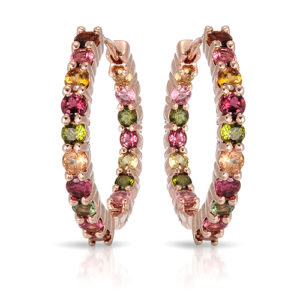
One of the biggest challenges in online jewelry sales is scale. A 10 mm pendant, a slim band, and a pair of petite hoops can look much larger or smaller than expected when photographed alone. Video on a hand, ear, neck, or wrist gives shoppers a more immediate sense of proportion.
Hand-model video is particularly effective for rings, bracelets, watches, and small charms. The natural movement of the hand shows how the piece wears in everyday life while keeping the jewelry as the focal point. For earrings and necklaces, a model can add warmth, style, and context that a tabletop shot cannot provide.
The trade-off is consistency. Model content requires wardrobe, skin tone, grooming, styling, and casting choices that fit your brand. A product-only rotation is easier to standardize across hundreds of SKUs. Many growing brands use both: clean product video for every listing and model video for bestsellers, campaigns, and social promotion.
Build a Video Library, Not a One-Time Post
A strong jewelry video shoot should produce assets that work across your marketing. A single well-planned session can create a horizontal website clip, a vertical social reel, a square placement for paid advertising, and short detail cuts for product pages. Planning these outputs before production prevents last-minute cropping that cuts off the jewelry or weakens the composition.
Consistency matters just as much as creativity. When shoppers browse several pieces in a collection, matching backgrounds, lighting style, camera angles, and pacing create a polished storefront experience. It tells customers that your business is established, careful, and invested in quality.
At TN Connections, jewelry video production is approached with the same close attention used for high-resolution jewelry photography: every reflection, gemstone detail, and finishing touch has a role in how the product is perceived. That level of care is especially valuable for remote clients who need dependable, sales-ready assets without managing an in-house studio.
Prepare Pieces So the Camera Sees Their Best Side
Retouching can refine a final video, but preparation saves time and produces a better result. Before sending pieces for filming, inspect them under bright light. Remove fingerprints, dust, polishing residue, loose threads, and protective stickers. Confirm that clasps close properly, stones are secure, and chains are untangled.
For collections, label every item clearly and provide SKU information. If a piece has a specific selling point, such as a hidden halo, a convertible design, a rare center stone, or an engraved message, call it out before the shoot. Those details can guide the camera angles and help ensure the video supports your product description.
If color matching is critical, share any relevant information about the metal, gemstones, and intended use. A product made for a white-background marketplace listing may need a different visual approach than a moody campaign clip for a luxury collection. Clear direction makes the process easier and protects the consistency of your brand.
Make the First Few Seconds Count
Most product videos are watched quickly, especially on social media and mobile product pages. Lead with the piece at its most compelling angle. Let the shopper see the full item early, then move into closer detail. A video that begins with an abstract reflection or a slow reveal may feel artistic, but it can underperform if the jewelry is not immediately recognizable.
Keep the finished clip concise. For many product pages, 10 to 20 seconds is enough to show a rotation, sparkle, and key details. Campaign content can run longer when it has a clear narrative, but every second should earn its place. The best jewelry videos leave customers wanting to look again, not waiting for the video to end.
When shoppers cannot hold a piece in their hands, your imagery has to do more than look gorgeous. It has to answer questions, create desire, and make the purchase feel safer. Give each piece the movement, detail, and attention it deserves, and your catalog can start working harder long after the camera stops rolling.