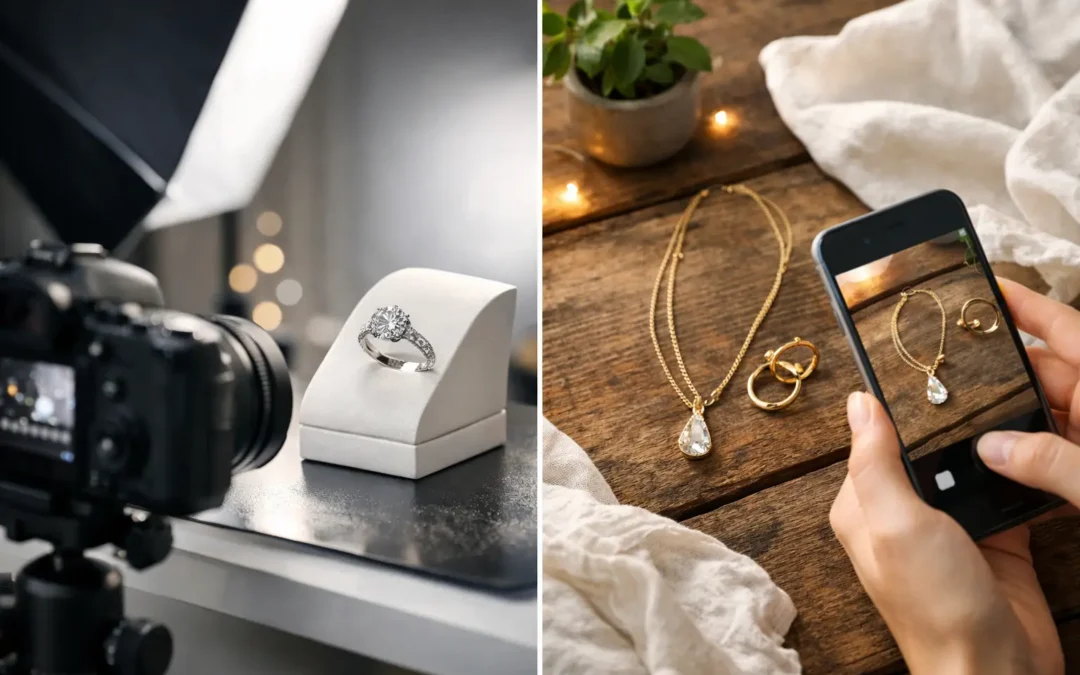
A diamond ring can look brilliant in person and strangely dull online. A gold chain can turn orange under a kitchen light. A close-up of a gemstone may show a beautiful color to the eye, then reveal glare, dust, and soft edges on a product page. That is the real business question behind jewelry photography versus DIY images: not whether a phone can take a photo, but whether the image gives a shopper enough confidence to buy.
For jewelry brands, imagery is part of the product experience. Customers cannot hold the piece, check its scale, or tilt it toward the light. Your photos have to communicate craftsmanship, material quality, sparkle, proportion, and personality in a fraction of a second.
Why Jewelry Is Harder to Photograph Than Most Products
Jewelry is small, reflective, highly detailed, and often designed around subtle differences. A polished metal surface reflects everything around it, including the camera, the room, and the photographer. A faceted gemstone can lose its fire if the lighting is too flat, while an uneven light source can create blown-out white areas that hide the cut.
DIY images can be useful for a quick preview, a work-in-progress post, or a casual behind-the-scenes story. The challenge begins when those same images become the primary visual assets for an online store, marketplace listing, wholesale catalog, or paid campaign. At that point, every inconsistency can make a collection feel less polished than it really is.
Professional jewelry photography is built around controlling the variables that a phone camera and a window-light setup cannot reliably manage. That includes lighting direction, reflections, focus depth, color accuracy, camera angle, styling, and detailed retouching. The goal is not to make jewelry look artificial. It is to make the online image feel as close as possible to the moment a customer sees the piece in person.
Jewelry Photography Versus DIY Images: The Difference Shoppers Notice
A buyer may not know why one product photo feels more trustworthy than another, but they notice the result. Professional images tend to look clear, consistent, and intentional across a full collection. DIY images often vary from item to item because the environment, daylight, camera distance, and editing choices change each time.
Detail and sharpness
Fine jewelry lives in the details. Prong work, pavé settings, engraving, chain texture, metal finish, and gemstone inclusions all need thoughtful handling. A phone can capture impressive images under ideal conditions, but tiny products push its limitations quickly. Automatic processing may over-sharpen edges, smooth texture, alter metal tones, or blur areas that should remain crisp.
A professional setup uses lenses, focus techniques, and controlled lighting chosen for small, reflective objects. This helps preserve the details that support value. When a shopper can clearly see the craftsmanship, they have fewer reasons to hesitate.
Color and material accuracy
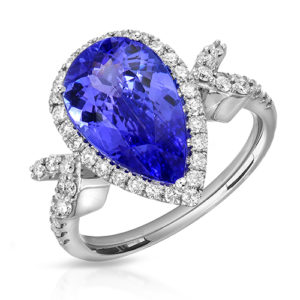
Color accuracy is especially important for gemstones and precious metals. A sapphire that looks royal blue in one listing and almost black in another creates uncertainty. The same is true for yellow gold that appears too warm, rose gold that shifts toward copper, or silver that takes on the color of its surroundings.
DIY editing apps can make an image more eye-catching, but filters and automatic adjustments can also misrepresent the product. Professional retouching corrects distractions while protecting the authentic character of the piece. For a gemstone seller or a brand with repeat clients, that distinction supports credibility.
Consistency across a collection
One strong DIY image is not the same as a consistent catalog. A storefront with mixed backgrounds, changing crop ratios, uneven shadows, and different color temperatures can feel fragmented. It makes comparison harder for customers and creates more work when you need images for marketplaces, email campaigns, social media, print, or a line sheet.
Consistent professional photography gives a collection a recognizable visual standard. Each piece can be photographed at a similar scale, angle, and background treatment while still receiving the lighting it needs. That consistency makes your brand look organized and established, whether you sell ten pieces or ten thousand.
The Real Cost of DIY Images
DIY photography is often framed as the free option. In practice, it has a cost in time, equipment, reshoots, editing, and missed opportunities. If you spend an afternoon trying to eliminate reflections from one bracelet, that is time away from sourcing, designing, customer service, fulfillment, or sales.
There is also the cost of inconsistency. A product page with dark, unclear, or inaccurate images may lead to lower engagement, more buyer questions, abandoned carts, and returns from customers whose expectations did not match the piece they received. Great imagery cannot solve every sales challenge, but it can remove visual friction before it starts.
This does not mean every image needs a full creative campaign. The right investment depends on the product and its purpose. Basic white-background e-commerce images may be the priority for a large catalog. A new bridal collection may need high-end detail shots, jewelry-on-model images, and lifestyle banners to create emotional appeal. A trade show launch may call for a complete set of product and promotional assets on a short timeline.
At TN Connections, volume jewelry photography starts at $12 per image, giving many brands a practical way to improve their catalog without treating polished content as a luxury reserved for major retailers.
When DIY Photography Still Makes Sense
DIY content has a place in a healthy jewelry marketing mix. It can feel immediate, personal, and social. A designer showing a wax model, a bench jeweler setting a stone, or a founder sharing a new arrival on camera gives customers a human view of the brand.
Use DIY images where authenticity and speed matter more than precise product representation. They work well for Stories, informal posts, team updates, customer reposts, and early concept feedback. Just avoid making them the only images a shopper sees before making a purchase decision.
The strongest brands often pair both approaches. Professional product photography builds the dependable sales foundation. Casual in-house content keeps the brand active and approachable between campaigns. One establishes confidence; the other creates connection.
What Professional Images Can Do Beyond a Product Page
A carefully photographed ring or pendant is not limited to a single web listing. High-resolution, retouched assets can support marketplaces, digital ads, social posts, printed materials, press requests, retailer presentations, and seasonal campaigns. When the original image is created with those uses in mind, your team is not forced to recreate the wheel every time a new marketing need appears.
Model photography adds another layer by showing scale and movement. A necklace becomes easier to understand when shoppers can see where it falls on the neckline. Earrings gain personality when they are photographed in a natural pose. Hand-model images can bring rings and bracelets to life without distracting from the craftsmanship.
Creative lifestyle photography also helps when the purchase is emotional, gift-driven, or occasion-based. A clean catalog image answers, “What is it?” A gorgeous campaign image can answer, “How will this make me feel?” Both are valuable, and the best choice depends on where the customer is in the buying process.
Choosing the Right Approach for Your Brand
Start with the role your images need to play. If you are testing a few designs, selling low-volume handmade pieces, or sharing daily studio activity, DIY content may be enough for the moment. If you are building an e-commerce storefront, applying to a marketplace, approaching retailers, launching a collection, or selling pieces where detail affects perceived value, professional photography becomes a sales tool rather than an expense.
Ask whether a new shopper can clearly answer a few simple questions from your current photos: What does the piece really look like? How large is it? What color is the metal or gemstone? Can I see the craftsmanship? Does this brand feel trustworthy? If the answer is not consistently yes, better imagery is likely one of the clearest improvements you can make.
Your jewelry already carries a story of design, skill, and material. Give it images that let customers see that story clearly, then make it easy for them to say yes.