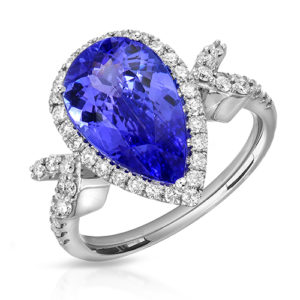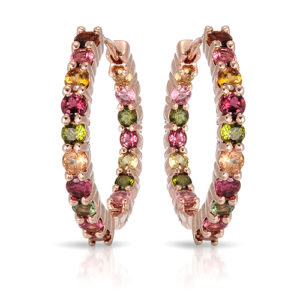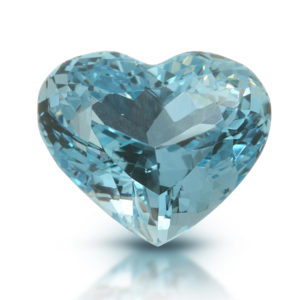
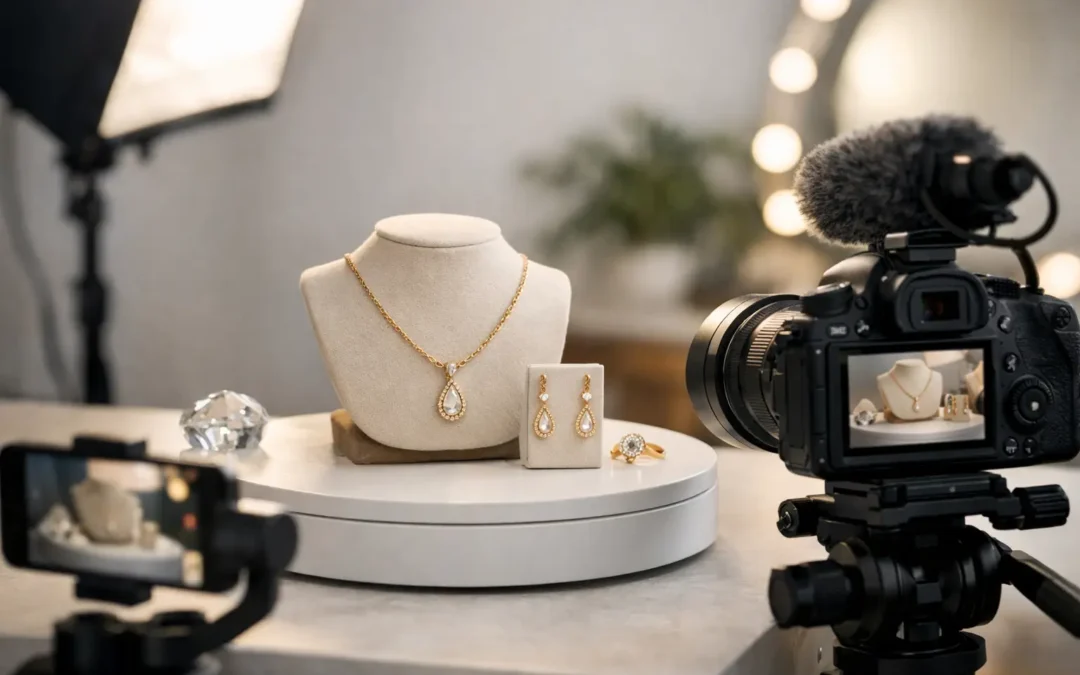
A still image can show the shape of a ring. A well-produced video shows what makes someone want to wear it: the flash of a diamond as it turns, the depth of a sapphire, the polish on a gold edge, and the scale that a flat product page cannot fully communicate. Creating jewelry product videos is most effective when every movement, reflection, and angle is planned around how shoppers evaluate fine jewelry online.
For most brands, the best starting point is a short, clean product video on a controlled background. It should show the full piece, close details, and natural movement without distracting props or effects. Add model, hand-model, or lifestyle footage when the collection needs personality, scale, or a stronger campaign story.
What Jewelry Video Must Accomplish
Jewelry is unusually difficult to film because its selling points are often small and light-dependent. Diamonds need to show life without becoming a field of harsh white glare. Polished gold, platinum, and silver must look clean while retaining their true form. Colored gemstones need accurate color and visible facet definition, not an overexposed glow that makes every stone look alike.
A product video should answer the questions a shopper cannot answer from a single photograph: How does the piece sit? How thick is the band? Does the pendant have dimension? Where are the clasps, prongs, engraving, or hidden design details? The goal is confidence, not visual noise.
That is why a generic spinning-product setup often falls short for jewelry. A fast rotation can blur pavé, flatten the stone setting, and create uncontrolled reflections across polished metal. The camera movement, turntable speed, lighting direction, and retouching approach must be selected for the individual piece.
Start With the Sales Channel and Video Type
Before filming, decide where the video will live. Product-page videos need to be clear, efficient, and consistent across a catalog. Social videos can be more expressive, especially for a collection launch. Paid ads usually need an immediate visual payoff in the opening seconds. A single file rarely serves every purpose equally well, although a planned shoot can produce versions for each channel.
Clean Product Videos for E-Commerce
A white, light neutral, or carefully chosen solid background keeps the attention on the jewelry. This is the strongest choice for product pages, wholesale presentations, marketplaces, and large catalogs where visual consistency matters. A short rotation or a series of deliberate angle changes can reveal front, side, back, and detail views.
For rings, we often prioritize the head-on view, side profile, and interior band. For earrings, it is important to show the post, backing, movement, and how the pair relates in size. Necklaces benefit from a view of the pendant depth, chain texture, clasp, and an optional on-model shot. Watches require additional attention to dial legibility, bezel reflections, bracelet articulation, and crown details.
360-Degree Jewelry Videos
A 360-degree video gives the shopper a complete, controlled view of one piece. It works particularly well for rings, watches, pendants, bracelets, and statement earrings with dimensional construction. It is also an efficient option for collections that need repeatable coverage across many SKUs.
The trade-off is creative range. A 360 is excellent for inspection, but it does not show the emotional scale or styling context of jewelry worn by a person. Many brands get the best result by using a 360 video for every key product and reserving model footage for hero styles, new launches, and campaign content.
Model and Lifestyle Videos
Model video gives jewelry a human relationship. It shows the length of a necklace, the drop of an earring, the stacking potential of rings, or the presence of a bracelet in motion. For luxury collections, it can also establish mood and reinforce the design point of view.
However, model footage should not replace clear product coverage. A dramatic close-up may look beautiful on social media while leaving a buyer unable to inspect the setting. Use it as a complement to clean product footage, not a substitute. The right balance depends on whether the immediate goal is catalog conversion, brand building, or a campaign launch.
Lighting Is the Difference Between Shine and Distraction
The most common jewelry-video mistake is treating more sparkle as better sparkle. Uncontrolled point lights can cause diamonds to flare repeatedly, obscure the cut, and pull attention away from the piece. Overly broad light can make faceted gemstones look dull and polished metal look gray.
In our Los Angeles studio, we build jewelry-specific lighting that separates the metal contours from the background while revealing gemstone detail. The lighting is adjusted as the piece moves, because a reflection that looks elegant from one angle may become a distracting hot spot a few degrees later. Macro filming makes this even more exacting: a minor fingerprint, loose fiber, or reflection from the camera can become visible.
Color accuracy matters just as much. Emeralds, rubies, sapphires, opals, and other colored stones need thoughtful exposure and color correction so the footage represents the actual piece rather than an artificially intensified version. Natural variation is part of fine jewelry. Video should respect it.
A Reliable Process for Creating Jewelry Product Videos
A successful shoot begins before the camera rolls. First, group products by type, metal finish, stone color, and required deliverables. This makes it easier to maintain a consistent lighting recipe and angle sequence across a catalog. It also prevents an assortment from looking as though it was filmed in several unrelated productions.
Next, define the exact shots. A concise shot plan usually includes the hero angle, a full rotation or movement sequence, side and back visibility where relevant, and a macro detail for the feature that justifies the price: a center stone, pavé work, milgrain edge, engraving, unusual setting, or distinctive clasp.
Then, prepare each piece carefully. Jewelry should be cleaned, inspected, and secured before filming. Chains must be arranged without awkward twists. Earrings should hang evenly. Rings need positioning that shows the center stone and profile at their best. Good preparation saves significant retouching time and keeps the finished video believable.
During filming, use slow, intentional movement. A piece should move enough to catch light and reveal depth, but not so quickly that the viewer loses the detail. Short clips are often stronger than long ones. For a product page, 10 to 20 seconds can be enough when every second provides useful information.
Professional post-production completes the presentation. Retouching can remove dust, temporary supports, minor distractions, and unwanted reflections while maintaining the material truth of the jewelry. Editing also controls pace, crops the footage for vertical or horizontal placements, and ensures that each video begins with a compelling view rather than a slow setup.
Keep Video Consistent With Your Product Photography
Video performs best when it feels like part of the same visual system as your still photography. Background tone, metal color, shadow style, scale, and retouching standards should match your catalog images. If a shopper moves from a white-background ring photograph to a yellow-tinted video with a different apparent stone color, confidence drops instead of rising.
This is especially important for manufacturers, wholesalers, and e-commerce sellers managing volume. Consistency makes a catalog easier to browse, supports a more polished brand impression, and lets teams add new products without reinventing the visual direction every season. A high-end fine jewelry brand may need more art direction per piece; a large commercial catalog may prioritize repeatable production and efficient volume pricing. Both need disciplined standards.
Plan for More Than One Crop
A horizontal product video may fit a website banner, while vertical footage is more useful for social placements and mobile ads. Rather than forcing one format everywhere, plan the framing at the shoot stage. Leave enough room around the jewelry for multiple crops, or capture dedicated takes for each use.
Also consider whether sound adds value. Most jewelry product videos work well without sound because shoppers often view them muted. If you add music or ambient audio, it should support the brand without competing with the visual details. The product remains the focal point.
Work With a Jewelry-Specific Video Studio
Creating jewelry product videos requires more than a camera and a turntable. It requires an understanding of diamonds, colored stones, reflective metals, macro detail, and the catalog standards that make a collection look credible online. TN Connections Inc. produces jewelry photography and video from the Los Angeles Jewelry District for local clients, Southern California brands, and nationwide mail-in projects.
Whether you need polished 360-degree videos for a growing e-commerce catalog or art-directed campaign footage for a luxury launch, begin with the shopper’s decision point. Show the detail they need to trust the piece, then make that detail impossible to overlook. Request a free quote to plan footage that gives your jewelry the presence it deserves.