A necklace can look extraordinary in person and still underperform online if the chain disappears, the pendant looks smaller than expected, or the metal reflects every surface except its actual finish. The best photos for necklace listings answer a shopper’s practical questions before they have to ask: What does it really look like? How large is it? How does it sit when worn? And is this the level of quality I expect for the price?
For most jewelry stores, the strongest listing uses a small set of purposeful images rather than several versions of the same shot. Start with a precise white-background hero image, then add close detail, scale, and an on-model or styled image where it helps the buyer understand the piece. The right mix depends on the necklace design, sales channel, price point, and brand position.
The Core Images Every Necklace Listing Needs
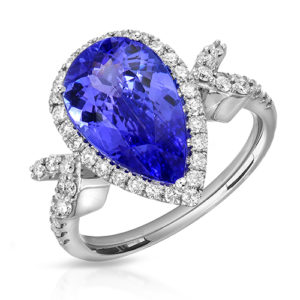
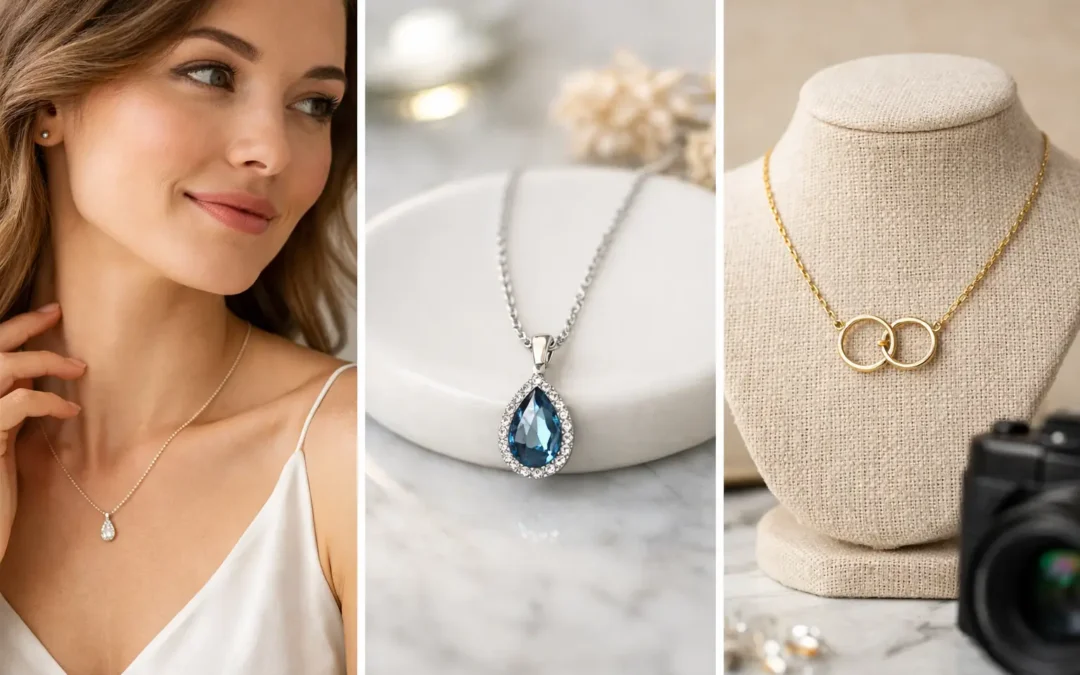
A clean primary image is the foundation. It should show the complete necklace, including the pendant, chain, clasp where relevant, and the true silhouette of the piece. White-background photography remains the most versatile choice for Shopify stores, wholesale line sheets, marketplaces, and catalog collections because it keeps the focus on the jewelry and creates consistency from product to product.
That hero image should not be treated as a simple cutout. Necklaces are difficult to light because polished metal can reflect the camera, studio surroundings, and even the chain’s own links. A controlled jewelry lighting setup creates crisp edges and dimensional highlights without turning silver into gray or yellow gold into an overly orange color. Diamonds need defined scintillation and facets, while colored gemstones need accurate hue and enough contrast to show their cut.
A second image should move closer. This is where a buyer inspects pavé work, engraving, prongs, stone settings, pearl surface quality, or the texture of a handmade pendant. For fine jewelry, this image often carries as much selling power as the hero shot. It gives shoppers evidence of craftsmanship.
Scale is the third essential. A pendant against a neck, a model image, or a carefully styled shot showing the chain length helps prevent a common source of returns: a customer receiving a piece that feels much larger or smaller than anticipated. Measurements in product copy still matter, but visual scale is faster to understand.
Best Photos for Necklace Listings by Image Type
The most effective photo set combines images with different jobs. Repeating nearly identical angles adds less value than showing the buyer something new with each frame.
| Image type | What it answers | Best use |
|---|---|---|
| White-background full view | What is included and what is the overall shape? | Main product image and catalog consistency |
| Detail macro | How fine is the craftsmanship and stone setting? | Fine jewelry, diamonds, gemstones, engraving |
| On-model image | What is the actual scale and drop length? | Pendants, chains, layered styles, premium collections |
| Side or profile angle | How does the pendant sit and how deep is the setting? | Dimensional pendants and substantial settings |
| Clasp or back view | What does the construction look like? | Adjustable chains, branded details, high-ticket pieces |
| Lifestyle or campaign image | What feeling does the necklace create? | Brand launches, social media, editorial collections |
Not every necklace needs all six. A simple, lower-priced chain may need a strong hero image, a close link detail, and one model image. A diamond pendant with a substantial price tag may justify five or six views, including its side profile and clasp. The more a buyer must evaluate material quality, construction, and proportion before purchasing, the more helpful supporting angles become.
White Background Is the Non-Negotiable Starting Point
A white-background necklace image should look clean without looking flat. The chain must hold its shape, links need separation, and the pendant should be centered naturally. Excessive shadow can make a necklace look heavy or dated, but removing every shadow can make it appear to float without depth. The goal is a polished, believable presentation.
For a catalog with many styles, standardized positioning matters. Similar necklace categories should share consistent crop, spacing, camera angle, and retouching approach. This visual discipline makes a collection easier to shop and gives even an expanding catalog a more established brand presence.
On-Model Images Solve the Scale Problem
Necklaces are worn jewelry. Showing one on a model gives the buyer information that a product-only image cannot: where the pendant lands, how the chain follows the collarbone, and whether the piece reads as delicate, substantial, or dramatic.
Use an on-model image that keeps attention on the necklace. Clothing color, neckline, skin tone, hair, and pose all affect how clearly the jewelry reads. A busy print or deep shadow may be visually attractive but can hide a fine chain. For higher-end collections, intentional styling can also place the necklace in the customer’s desired context - bridal, everyday luxury, evening wear, or a gift-worthy occasion.
A hand-model image is usually more valuable for rings and bracelets than necklaces. For necklaces, the neck and upper torso are the clearest way to communicate fit and scale.
Angles That Reveal Value Instead of Adding Clutter
The front-facing view is usually the first image because it is the most direct. But certain designs need additional angles to reveal their value. A bezel-set gemstone may look thin from the front but substantial from the side. A locket needs an open view. A personalized pendant may need a close crop that makes the engraving legible. A reversible medallion should show both sides.
Choose angles based on the construction of the necklace, not a fixed image quota. Ask what a careful shopper would inspect if the piece were in their hand. Then photograph that feature clearly.
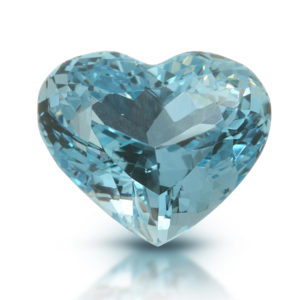
For diamonds and gemstones, avoid relying on one dramatic sparkle image. Strong jewelry photography balances brilliance with honest representation. If every facet blows out to white, the stone loses its shape. If lighting is too soft, it can look lifeless. Our approach in the studio is to light stones so shoppers see their cut, fire, and surface detail while maintaining an accurate overall appearance.
Color Accuracy Matters More Than Mood
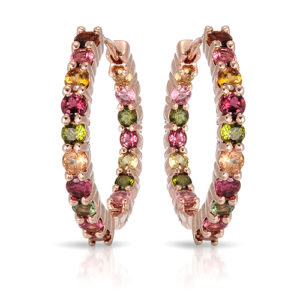
Metal and gemstone color influence buying decisions immediately. Yellow gold, rose gold, sterling silver, platinum, black rhodium, and mixed-metal pieces all require different reflection control. The same is true for colored stones. Emeralds, sapphires, rubies, opals, turquoise, and morganite can shift noticeably under unsuitable lighting or overaggressive editing.
Professional retouching should remove distractions such as dust, scratches from handling, fibers, uneven background, and temporary setup supports. It should not invent stone color, erase natural material character, or make metal finishes look unlike the item being sold. For one-of-a-kind gemstones especially, accuracy protects customer trust.
There is a trade-off with highly artistic imagery. A warm campaign image can create emotion and increase perceived brand value, but it is not always the best image for a shopper comparing color or examining a setting. Use creative images to build desire, then support them with precise product photography that makes purchasing easier.
Prepare Necklaces Before the Camera Comes Out
Photography can correct small distractions, but preparation saves time and produces better results. Check each necklace under bright, neutral light before it enters the studio. Look for fingerprints on polished metal, twisted chains, loose tags, dust around stone settings, and pendants that are not hanging straight.
For a multi-style collection, organize pieces by SKU and provide accurate chain lengths, metal types, gemstone descriptions, and any special features that should be photographed. If you need new images to match an existing catalog, share several approved examples. Matching a visual system requires more than using a white background - it involves crop, reflection style, shadow treatment, color balance, and framing.
Build a Listing Set for the Channel Where You Sell
Marketplace shoppers often make fast decisions from a thumbnail, so the main image needs immediate clarity and a clean background. Direct-to-consumer sites have more room to tell the product story through model photography, close details, videos, and campaign imagery. Wholesale buyers prioritize consistent identification and useful product views, while luxury clients may expect more art direction and a richer visual experience.
Short 360-degree videos can be particularly useful for pendants with depth, moving charms, intricate settings, or mixed finishes. Video does not replace still photography. It supplements it by revealing movement and dimensionality that a single angle cannot convey.
At TN Connections, our Los Angeles Jewelry District studio photographs necklace collections for luxury brands, independent designers, wholesalers, and high-volume e-commerce sellers. We can create refined hero images, accurate macro detail, model photography, and retouched catalog assets within one coordinated production plan. Local clients can work with us in Downtown Los Angeles, while nationwide clients can send collections through our mail-in service. Volume pricing is available for qualifying catalog projects, with images starting at $12 when applicable.
A necklace listing earns confidence when every image has a reason to be there. If your current photos leave shoppers guessing about scale, color, finish, or craftsmanship, request a free quote and plan a photo set that lets the jewelry do its job: look worth owning.