A diamond ring can look flawless in a jewelry box and arrive with a bent prong, a rubbed finish, or a missing stone if it moves inside the package. That is why knowing how to ship jewelry safely matters before a collection travels to a photography studio, a buyer, a retailer, or a trade partner. The goal is not simply getting the parcel delivered. It is preserving every piece in the exact condition needed for inspection, photography, and sale.
For most jewelry businesses, the safest approach is simple: document every item, immobilize each piece in protective packaging, use a discreet sturdy outer box, insure the shipment appropriately, and choose a tracked service that requires a signature. The details change with the value, fragility, and number of pieces, but those principles do not.
Start with an item-level inventory
Create an inventory before anything goes into a box. This is especially useful for fine jewelry, loose stones, watches, and multi-piece collections headed to a photo studio. Include the SKU or style number, a clear description, metal and stone details, declared value, and the quantity being shipped.
Photograph each item before packing. Take quick condition photos of clasps, prongs, pavé areas, watch faces, and any existing marks. These images are not meant to replace professional product photography. They establish condition and give both sender and recipient a clean reference if there is ever a question about a piece.
For a larger catalog, place a printed packing list inside the shipment and email the same inventory separately. Avoid putting retail prices or descriptions such as “diamond jewelry” on the outer shipping label. The recipient needs the detail. The outside of the parcel does not.
Pack each piece so it cannot move
Jewelry is easily damaged by contact with other jewelry. Chains tangle, gemstones can scratch softer metals, and earrings can pierce through lightweight pouches. Wrapping everything together may feel efficient, but it creates unnecessary risk.
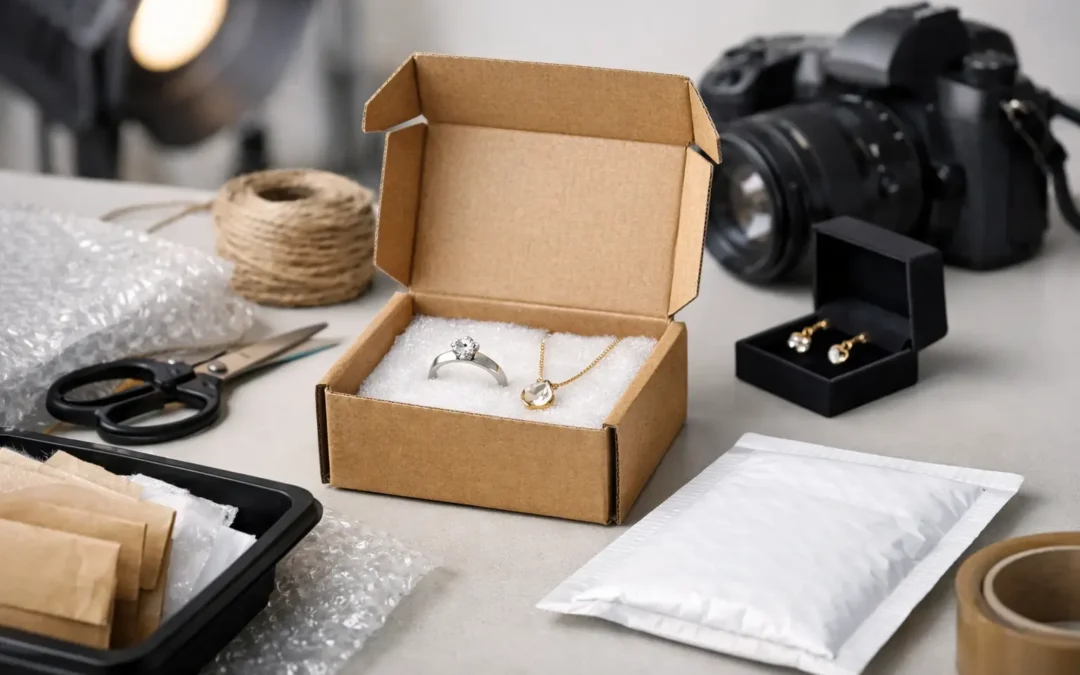
Use a small jewelry box, padded pouch, gem jar, or compartmented container for each piece or matched set. Rings should be secured in ring slots or wrapped in soft, non-abrasive tissue before being placed in a compact box. For necklaces and bracelets, fasten the clasp, thread the chain through a small card or slit insert when practical, and secure it so it cannot slide around.
Loose diamonds and gemstones need their own treatment. Store each stone in a labeled gem jar, parcel paper, or a secure display case designed for stones. Do not place loose stones in envelopes, tissue folds, or bags that can open unnoticed. If you are sending matched pairs or calibrated stones, label them carefully so size, shape, and orientation stay organized.
Watches should be cushioned around the case and bracelet, with the crown protected from pressure. Do not tape directly onto metal, leather, plating, pearls, or gemstone surfaces. Adhesive can leave residue or lift delicate finishes.
Build a protective box within a box
Once each item is individually secured, place the smaller containers into a rigid inner box. Fill empty space with clean cushioning material until nothing shifts when you gently move the box. The key test is simple: if you can hear or feel movement, add more support.
Place that inner box inside a larger, new corrugated shipping box with additional cushioning on all sides. This double-box method helps protect against impacts, compression, and rough handling during transit. A box that is too large can be just as problematic as one that is too small because the contents may gain momentum inside it.
Seal every opening with quality packing tape. Reinforce the center seam and edges rather than relying on a single strip across the top. Use a plain outer box whenever possible. Branded jewelry packaging, luxury logos, or labels that identify the contents can attract the wrong kind of attention.
For higher-value shipments, consider adding a tamper-evident seal to the inner package. It does not make a shipment invulnerable, but it gives the recipient a visible indication if the internal package has been disturbed.
Choose shipping service based on risk, not convenience
The cheapest shipping option is rarely the right choice for valuable jewelry. Select a carrier and service based on the item’s declared value, delivery speed, tracking level, insurance availability, signature requirements, and the carrier’s current policies for jewelry and precious materials.
Before shipping, read the carrier’s terms closely. Coverage limits and eligibility rules can vary by service type, destination, and whether the item is a finished jewelry piece, a loose gemstone, or a watch. Third-party shipping insurance may be an option in some situations, but it also comes with documentation requirements and exclusions. Keep all receipts, photos, invoices, and tracking records until the recipient confirms that the full shipment has arrived and been checked.
Signature confirmation is a smart default for valuable pieces. Ship to a business address with reliable receiving procedures when possible, rather than leaving an expensive package exposed at a residential door. For a particularly valuable collection, discuss delivery timing with the recipient in advance so someone is prepared to receive it.
There is a trade-off between speed and cost. Overnight service can reduce the amount of time jewelry is in transit, but it can be expensive for a large catalog. Insured, tracked ground shipping may be appropriate for lower-value commercial pieces when the route and delivery location are dependable. For high-value fine jewelry, shorter transit time and stronger chain-of-custody features are generally worth the added cost.
Keep the chain of custody clear
Do not leave a jewelry package in an unattended drop box if you can avoid it. Take it to a staffed carrier location, obtain an acceptance receipt, and verify that the tracking record shows the shipment entered the carrier’s system. That receipt is useful proof of tender, particularly if tracking does not update immediately.
Send the tracking number to the recipient as soon as the package is accepted. Include the expected delivery date, the number of boxes, and any handling notes that matter. If one project is shipped in multiple cartons, number them clearly on the packing list and notify the recipient that more than one package is coming.
The recipient should inspect the outer box before opening it. If there is visible damage, photograph the package first, keep all packing materials, and document the contents as they are unpacked. Fast, careful documentation protects everyone if a claim is necessary.
How to ship jewelry safely to a photography studio
When jewelry is being shipped for photography, organization protects more than the merchandise. It protects the production schedule. A studio needs to know which items belong to which collection, which pieces are priority products, and whether a particular gemstone color, engraving, or design detail requires special attention.
Label individual containers with SKUs rather than customer names or retail pricing. Include a shot list that identifies the products needing white-background images, alternate angles, on-model photography, lifestyle scenes, 360-degree video, or retouching. If there are details that must be shown accurately, such as diamond side profiles, colored gemstone saturation, clasp construction, or a maker’s mark, call them out in writing.
In our Los Angeles Jewelry District studio, we work with shipped collections from designers and e-commerce sellers nationwide. Clear inventory and careful packaging help us check in a collection efficiently, maintain catalog consistency, and begin photographing without time lost identifying unmarked items. They also allow our team to return every piece in the same organized system after final approval.
Before sending a collection, confirm the studio’s receiving address, receiving hours, preferred carrier, and whether a signature is required. Never assume a package can be left after business hours. For local clients in Downtown Los Angeles and Southern California, hand delivery can be the best option for particularly valuable or time-sensitive pieces.
Common mistakes that put jewelry at risk
Most shipping damage comes from small shortcuts: a chain placed loose in a box, two rings rubbing together, an oversized package with too little fill, or a label that advertises what is inside. Another frequent problem is declaring a value that does not match the documentation needed for insurance.
Avoid using flimsy mailers for fine jewelry, even when the item seems small. Avoid sending a collection without an itemized list. And avoid packing dirty pieces when they are headed for photography. Dust, fingerprints, polishing compound, and loose tags slow down prep and can make it harder to evaluate a piece accurately on arrival.
A well-packed shipment gives your jewelry the same respect you expect from its final images: careful handling, controlled presentation, and no avoidable surprises. If you are preparing a collection for catalog photography, creative campaign work, or 360-degree jewelry video, request a free quote from TN Connections and confirm the best shipping plan before the first box leaves your hands.