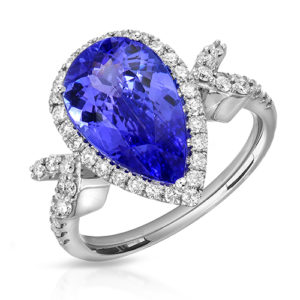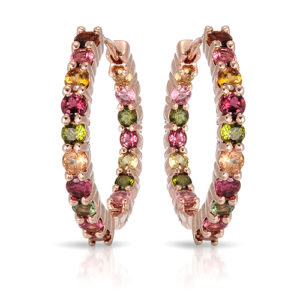
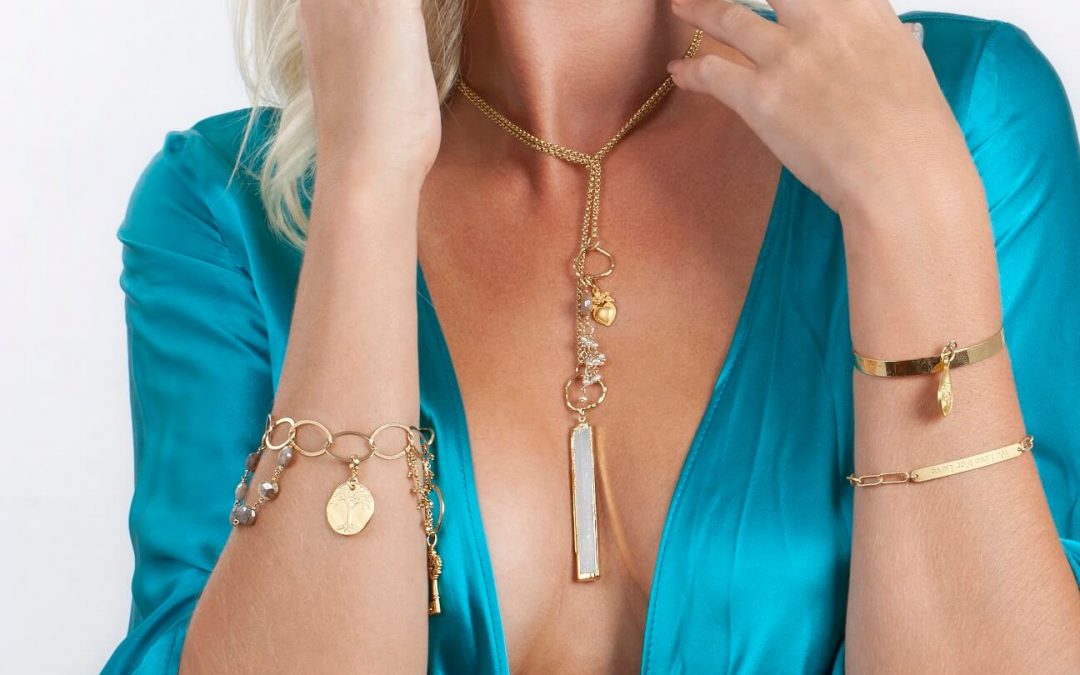
A ring can look flawless on a white background and still leave a shopper asking one crucial question: what will it look like on me? Jewelry model photography answers that question by showing true scale, fit, movement, and personality. It gives customers the visual context that turns a beautiful product into a wearable desire.
For fine jewelry brands, on-model imagery also communicates the emotion behind the collection. A diamond tennis bracelet catches light differently on a moving wrist. An earring reveals its drop, profile, and sparkle when framed by a face. A chain looks more substantial, delicate, or layered once customers can see where it sits on the neckline.
Why Jewelry Model Photography Improves Conversion
Jewelry is a highly personal purchase, yet most online shoppers cannot touch it, feel its weight, or try it on. Product photography establishes the materials, craftsmanship, and details. Model photography supplies the missing human reference.
The strongest images make sizing easier to understand without making the piece feel ordinary. A close crop of a hand can show the scale of a stackable ring. A shoulder-and-neckline image can show how a pendant rests. A full styling image can place a statement cuff or layered necklace within a lifestyle that matches the customer your brand wants to reach.
This matters across price points. Luxury buyers expect editorial polish and careful art direction before they commit to a significant purchase. Marketplace and catalog shoppers need quick, clear information about proportion, closure placement, length, and wearability. In either case, the image reduces uncertainty.
On-model photography should not replace clean product images. It works best alongside white-background catalog photography, detailed macro views, and, where helpful, video. The catalog image proves the product. The model image makes the product feel relevant.
The Right Model Image Depends on the Jewelry
There is no single on-model format that suits every collection. The best approach depends on the jewelry category, sales channel, customer, and brand position.
| Jewelry type | Most effective model approach | What it helps shoppers see | |—|—|—| | Rings | Hand model, close crop, multiple hand positions | Finger coverage, band width, stacking potential | | Bracelets and watches | Wrist and hand model imagery | Scale, clasp placement, movement, fit | | Earrings | Beauty crop or side-profile image | Drop length, profile, sparkle, face framing | | Necklaces | Neckline, chest, and layered styling shots | Chain length, pendant placement, layering | | Statement pieces | Editorial half-body or full-look imagery | Presence, styling potential, brand personality |
A delicate diamond pendant may need only a clean neckline image and a close product detail. A fashion-forward designer collection may benefit from stronger styling, wardrobe, and creative direction. A high-volume wholesale catalog may need consistent hand-model images with controlled poses so every SKU reads quickly.
The trade-off is clarity versus atmosphere. Campaign imagery can create aspiration, but it should never hide the jewelry. If a dramatic pose, heavy wardrobe, or shallow focus makes the piece difficult to inspect, it may be better suited for a banner or social campaign than a primary product page.
Lighting Jewelry on a Model Is a Specialized Job
Photographing jewelry on skin is more complex than placing a piece on a clean set. Metals reflect the studio, surrounding surfaces, wardrobe, and even skin tones. Diamonds and gemstones require controlled light to show brilliance and facet definition without becoming a field of white glare. Polished gold needs shape and clean edge definition, while textured metal needs enough directional light to retain its surface character.
In our Los Angeles studio, we build lighting around the piece first, then refine the composition around the model. That approach protects accurate metal color while keeping diamonds lively and gemstones believable. Emeralds, sapphires, rubies, opals, and colored stones all respond differently under light. A setup that flatters a bright diamond can flatten a richly saturated gemstone.
Skin tone, nail styling, makeup, wardrobe color, and pose also affect the final result. Neutral styling is often the most flexible choice for large e-commerce catalogs. It gives the jewelry room to lead and allows images to work across product pages, email, paid ads, and marketplaces. For luxury campaigns, those same choices may be intentionally more expressive, provided they remain aligned with the collection’s visual identity.
Plan the Shot List Before the Model Arrives
A successful shoot begins with a shot list, not a mood board alone. Mood boards are useful for establishing tone, but they do not identify which images your product pages actually need.
Start by separating assets into two groups: conversion images and campaign images. Conversion images are the practical views that help customers understand how the jewelry wears. Campaign images are designed to establish a collection mood, tell a story, or support a launch.
For a necklace collection, a practical shot list might include a straight-on neckline image, a closer pendant detail, and one layered look if layering is part of the product story. For rings, it may include a relaxed hand pose, a grip pose that shows the band profile, and a styled stack. You do not need every pose for every item. You need enough coverage to answer the questions a buyer is likely to have.
Consistency becomes particularly valuable when photographing a collection of 20, 50, or 200 pieces. Keep crops, camera height, skin styling, lighting direction, and retouching standards consistent. Customers should feel that every product belongs to the same brand, even when they land on individual product pages from search or advertising.
Retouching Should Refine, Not Redesign
High-end jewelry-on-model images need retouching, but over-retouching can create a result that feels artificial and less trustworthy. The goal is to perfect distractions while preserving the actual jewelry.
Professional retouching may include cleaning small dust marks and fingerprints, refining metal reflections, balancing diamond sparkle, correcting minor skin distractions, smoothing garment wrinkles when appropriate, and ensuring gemstone color stays consistent from image to image. It should also preserve engraving, prong work, pavé settings, natural stone character, and meaningful design details.
For diamonds and gemstones, accuracy is especially important. Artificially changing stone color, clarity, size, or brilliance can create customer disappointment and returns. Premium retouching should make the product look its best under controlled lighting, not make it look like a different product.
Use Model Photography Across More Than One Channel
One carefully planned model shoot can supply a useful range of assets. The key is framing with multiple placements in mind. A vertical close crop may work well for product pages and mobile ads. A wider horizontal composition can support a website banner or email header. Detail images can be used in social posts, while simple on-model crops strengthen marketplace listings where permitted.
For brands that sell through Shopify, direct-to-consumer websites, retailer portals, and social channels, this flexibility improves the value of the production day. Still, each channel has different requirements. Marketplace listings often prioritize clear product visibility and may favor white or simple backgrounds. Brand campaigns can handle more styling and visual atmosphere. Build the shoot around the sales channel that matters most, then capture supporting assets efficiently.
Video can add another layer for pieces with movement, such as earrings, tennis bracelets, and layered chains. A short hand movement or turn of the head shows sparkle and drape in a way a still image cannot. It depends on your budget and launch plan, but video is particularly effective when the jewelry’s appeal is difficult to communicate in a single frame.
A Better Production Process for Valuable Jewelry
Fine jewelry requires a workflow that respects both the value of the pieces and the realities of a commercial launch. Before the shoot, confirm inventory, SKU names, item quantities, sizing details, and the exact pieces assigned to each look. This prevents missing-product delays and makes final file delivery easier to organize.
For local clients, TN Connections works from the Downtown Los Angeles Jewelry District, making it practical to review art direction, bring in collections, and approve the visual approach in person. For nationwide clients, secure mail-in projects can be planned around a detailed shot list, reference images, and a clear approval process.
Turnaround depends on the number of pieces, model requirements, styling complexity, and level of retouching. Simple, repeatable catalog work can move quickly. Luxury editorial work often deserves more pre-production and post-production time because the value is in the details. Qualifying volume projects can also benefit from pricing starting at $12 per image when the scope and repeatability make that structure appropriate.
Make the Jewelry the Reason to Pause
The best model image does more than show a person wearing jewelry. It makes the viewer pause long enough to imagine the piece as part of their own life. That can be quiet and minimal, or polished and dramatic, but it always begins with accurate scale, controlled reflections, and an image where the jewelry remains the clear focal point.
If your collection needs clean, conversion-focused hand-model photography or a more art-directed luxury campaign, request a free quote from TN Connections. Bring a clear product goal, a few reference images, and the questions your customers ask most often. Those details are usually where the strongest jewelry images begin.