A 500-piece jewelry collection cannot be photographed as 500 unrelated assignments. Volume jewelry photography is a controlled production system: every ring, pendant, bracelet, and pair of earrings should feel like it belongs in the same catalog while still showing the details that make each piece worth buying. The goal is speed without visual shortcuts, because inconsistency makes even a well-made collection look less credible online.
For manufacturers, wholesalers, growing e-commerce brands, and established fine-jewelry houses, the right studio process protects both the product and the sales presentation. It creates clean, repeatable imagery that is ready for websites, line sheets, marketplaces, and sales materials without slowing down the release schedule.
What volume jewelry photography should deliver
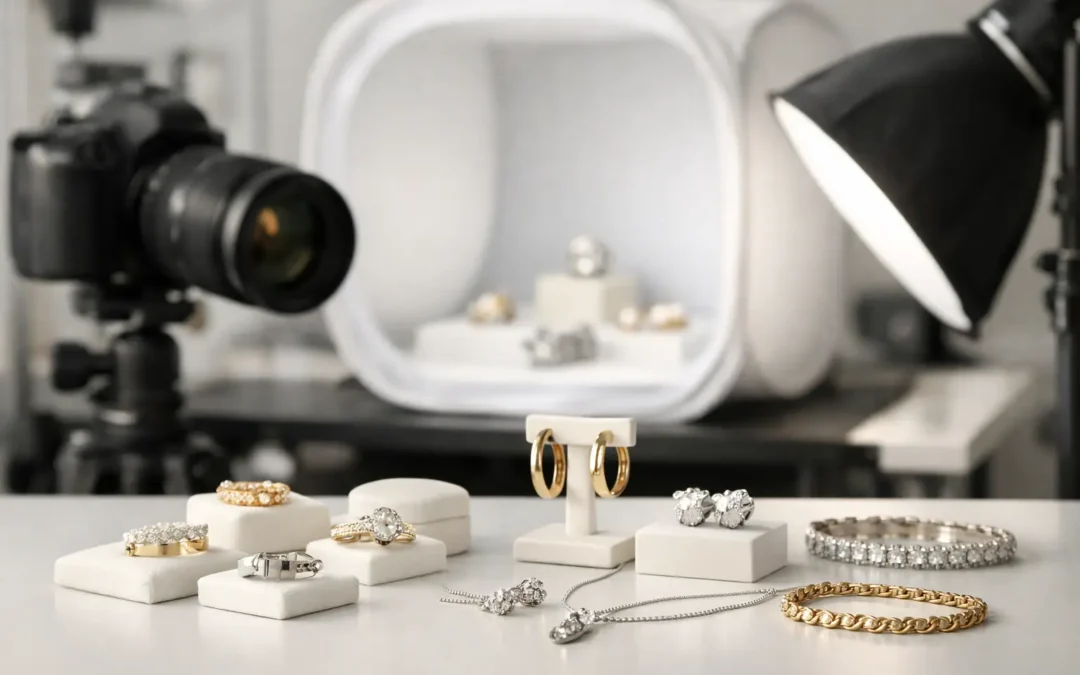
High-volume work is not simply a lower-priced version of luxury photography. It requires a different kind of discipline. Lighting setups must be repeatable, camera settings must be documented, and every product needs to move through preparation, photography, retouching, review, and delivery in an organized sequence.
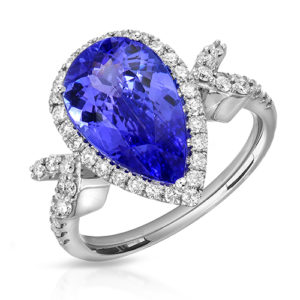
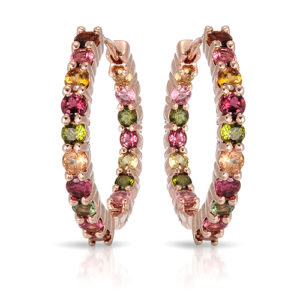
The finished images should represent metal color accurately, preserve gemstone detail, keep white backgrounds genuinely clean, and show a consistent apparent scale from product to product. A yellow gold chain should not shift from warm yellow in one image to pale green in the next. A diamond should show controlled brilliance rather than becoming a white reflective blur. Polished silver should look polished, not gray and flat.
In our Los Angeles studio, we build the production approach around the collection before the first piece is photographed. That planning is what allows a large catalog to move efficiently while maintaining a premium result.
Start with a repeatable visual standard
The most successful catalogs establish their image rules early. That usually includes background color, crop, product placement, shadow treatment, image dimensions, preferred angles, and the level of retouching. Once those decisions are made, they should not change halfway through a collection unless there is a clear reason to create a separate visual category.
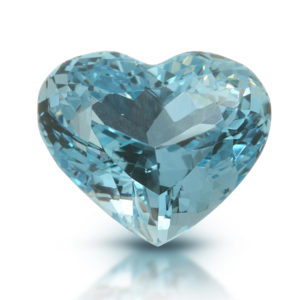
A refined bridal collection may need more detailed macro angles than everyday fashion jewelry. A gemstone dealer may need images that prioritize hue, facet pattern, and inclusions. A marketplace seller may require a tightly cropped hero image on pure white, while the same item’s brand website benefits from a side angle and a scale image.
The standard does not need to be rigid for its own sake. It needs to support how customers shop. When shoppers can quickly compare necklace lengths, ring profiles, stone shapes, and metal finishes, the catalog becomes easier to trust and easier to buy from.
Match new images to an existing catalog
Many jewelry businesses already have hundreds or thousands of product images. In that case, a new shoot should match the existing catalog as closely as practical rather than introduce a different lighting style without warning.
We review sample images for crop, camera angle, brightness, background, shadow, and retouching character. This is particularly valuable for ongoing catalogs where products arrive in monthly or seasonal batches. A documented style guide helps the tenth shoot look like it belongs next to the first.
There can be limits. If older images are underexposed, poorly cropped, or use a lighting approach that hides product detail, copying every flaw is rarely the best decision. A studio can preserve the recognizable catalog look while making thoughtful improvements that lift the collection as a whole.
Lighting is where speed and quality meet
Jewelry is difficult because it reflects nearly everything around it. Metal surfaces can mirror the camera, studio walls, hands, and surrounding equipment. Diamonds can produce harsh hotspots. Colored stones can lose saturation or shift in color when the lighting is not carefully controlled.
For volume jewelry photography, the lighting needs to be designed for a product category, then adjusted intelligently for the pieces that need special treatment. A polished gold hoop and a pavé diamond ring cannot always receive identical lighting, even if they are photographed within the same production system.
The key is controlled consistency. Diffused light shapes metal surfaces into clean highlights. Directional accents can bring out diamond sparkle and facet structure. Color-managed capture and calibrated retouching help preserve the difference between rose gold, yellow gold, white gold, platinum, sterling silver, and coated fashion metals.
This is also why an automated-looking approach can be a poor fit for premium jewelry. It may be fast, but it often produces uneven reflections, dull stones, and a generic result. The better approach is a streamlined jewelry-specific workflow supervised by people who know when a piece needs an extra adjustment.
Choose angles based on where the jewelry will sell
A single straight-on product image may be enough for a basic wholesale line sheet. It is rarely enough for a product page where customers need confidence before purchasing. The ideal image count depends on product type, price point, sales channel, and how much detail the design contains.
For most e-commerce catalogs, a useful set includes a clean hero image, a second angle that reveals profile or depth, and a close detail when stones, texture, engraving, or clasps matter. Rings often benefit from top, three-quarter, and side views. Earrings may need both a front pair shot and a close view that shows dimension. Necklaces should make chain length and pendant proportion easy to understand.
On-model and hand-model photography is not necessary for every SKU, but it can be highly effective for selected bestsellers, collection launches, and higher-ticket pieces. A model gives shoppers immediate scale and shows how jewelry sits on the body. White-background catalog images do the comparison work; model images build desire and context. The two formats work best together rather than competing for the same job.
Retouching should correct distractions, not rewrite the product
Professional jewelry retouching is part of the product photography process, especially at high resolution. It removes dust, fingerprints, minor mounting marks, unwanted reflections, and background imperfections. It can also refine metal surfaces and balance exposure across a catalog.
It should not misrepresent the item. A gemstone should not be recolored into a more saturated version of itself, and inclusions should not be erased in a way that changes the material being sold. Accurate retouching makes the jewelry look its best under a consistent visual standard while remaining faithful to the product.
For volume projects, retouching standards should be agreed upon before production begins. A commercial fashion catalog may call for efficient cleanup and consistent brightness. Fine jewelry, diamonds, and hero collection pieces may warrant more detailed hand retouching. The trade-off is straightforward: higher detail requires more time, but it can be the right investment where craftsmanship and stone quality drive the sale.
Build a workflow that protects turnaround time
Fast turnaround comes from preparation, not from rushing the photography. Before shipping or dropping off a collection, organize pieces by SKU, confirm quantities, and identify sets, variants, and priority items. Include an inventory list and note any special concerns such as fragile stones, one-of-a-kind pieces, or products that need matching imagery.
A practical volume workflow has four clear stages:
- Intake and style approval, including sample images or a test group when needed.
- Photography using the approved lighting, angles, crop, and naming convention.
- Retouching and quality control to verify color, alignment, cleanup, and SKU accuracy.
- Organized delivery in the requested file sizes and formats for web, marketplace, print, or sales use.
Clear file naming matters more than many teams expect. Images should connect directly to product SKUs so a retailer, web manager, or marketplace team can upload them without sorting through vague filenames. This reduces costly delays after the shoot is complete.
When volume pricing makes sense
Volume pricing works best when a collection has repeatable requirements. Similar products, consistent angles, shared lighting, and a predictable retouching level allow the studio to produce efficiently. At TN Connections, qualifying volume jewelry photography can start at $12 per image, with final pricing based on quantity, product complexity, angles, retouching needs, and turnaround expectations.
That does not mean every high-volume project should use the lowest production level. A large collection may include standard catalog items alongside a smaller group of hero pieces that deserve additional angles, creative art direction, model photography, or 360-degree video. Splitting the project into tiers often gives brands the best balance of budget and visual impact.
Local clients can work directly with us in Downtown Los Angeles near the Los Angeles Jewelry District. For nationwide brands, our mail-in process allows collections to be photographed, reviewed, and returned with the same careful production planning.
Questions jewelry businesses ask before a volume shoot
How many products should be photographed first?
If the catalog style is already established, production can begin with the full collection. If the look is new or changing, starting with a small approved test group is the safer choice. It confirms lighting, crop, retouching, and angles before the larger batch is underway.
Can luxury pieces and commercial styles be in one project?
Yes. The project simply needs defined tiers. Standard pieces can follow an efficient catalog workflow, while diamonds, intricate designs, high-value gemstones, and campaign selections receive more detailed lighting and retouching.
Are white-background images enough?
They are essential for many stores, marketplaces, and wholesale uses, but they are not always the whole answer. Add model, lifestyle, close-up, or video content where scale, movement, texture, or brand character will help a customer decide.
A strong jewelry catalog makes every product easy to compare and difficult to overlook. If you are preparing a large collection, request a free quote with your SKU count, sample items, preferred angles, and delivery deadline. A well-planned first batch can become the visual standard for every collection that follows.